

USL Dallas, LLC, took over the Super League club in a matter of weeks. Now Matt Valentine and Sam Morton talk with us about ambition, scale, and a bet they measure in decades.
Sit inside USL Dallas, LLC‘s Richardson headquarters for an hour and the same figure keeps surfacing. Eight million. It is the population of the Dallas-Fort Worth metroplex, the fourth-largest market in the country and on its way to third, and it is the number Matt Valentine and Sam Morton keep returning to whenever the conversation bends toward the thing that puzzles them most.
In a region that size, one that by the owners’ reckoning has more registered youth girls in soccer than any market in America, their new club cannot yet count on selling more than a few thousand tickets per match.
The club is Dallas Trinity FC, and as of a week ago, it belongs to them. USL Dallas, the group behind the incoming men’s side Atlético Dallas, closed on Trinity in a deal run entirely through the league and folded the two-year-old women’s team and the not-yet-launched men’s team under a single holding company.

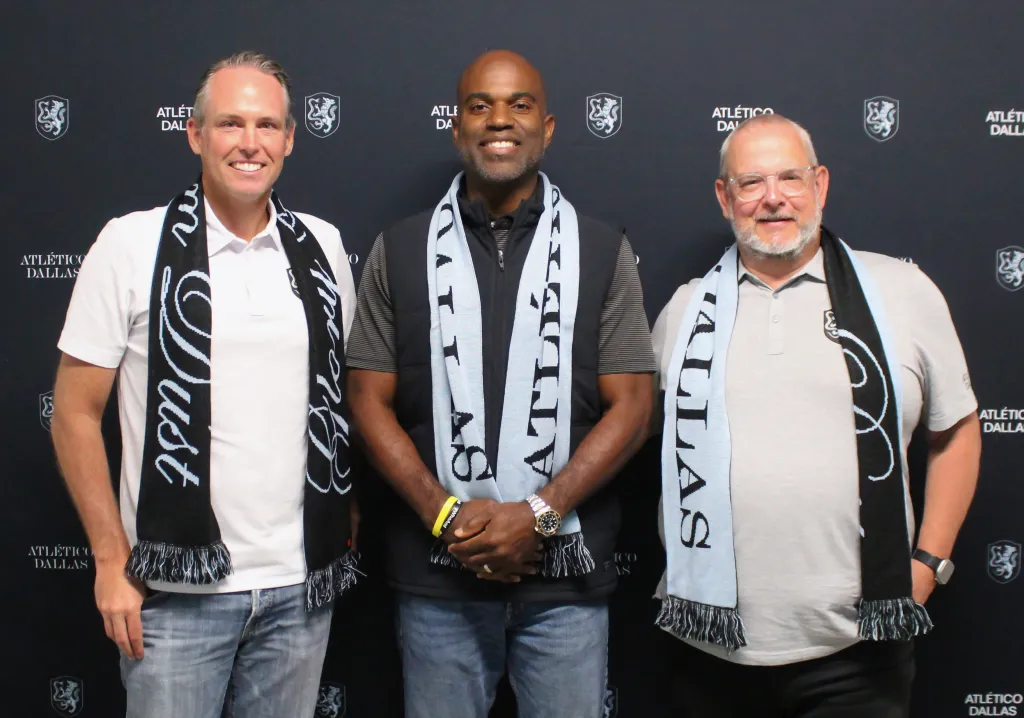
Valentine, the group’s founder and chairman, spent more than two decades in corporate finance before he chased a soccer team. Morton, his co-founder and a longtime Dallas radio executive, met Valentine on a local pitch when the two were boys. They sat down last week, before the club named its next manager, to explain what they intend to do with a women’s side they did not build and had less than a month to absorb.
The timeline is not hyperbole. The league first reached out roughly a month before the deal closed, went quiet for a stretch, then circled back in late May. By Memorial Day, the two sides had an agreement in principle. The paperwork took another two weeks. The transaction was with USL, not with the outgoing owners, and it moved fast enough that the group was still buying desks and ticket scanners in the days after it signed.
Trinity founder Charlie Neil – who financed and built the Super League club from its 2023 announcement through two Super League seasons and secured the Cotton Bowl as its home – is out, along with his family.
The new owners are quick to credit the former owners. The Neils, they say, kept building the roster through the sale as if they were staying, and told the new group this is the strongest squad the club has assembled.
Major-League Market
Valentine’s frustration is a market argument, and he makes it without apology. Dallas is an MLS-sized market, he says, so Trinity should be measured against the women’s equivalent, the NWSL.
“We’re in an MLS market,” Valentine said. “We should be looking at NWSL attendance, the way we look at MLS attendance [on the men’s side], because that’s the market we’re in. It’s not a function of, ‘we’re better than other USL teams’ or ‘we’re better marketers.’ We’re in a massive market.”
The NWSL averages around 11,000 a match. Trinity is closer to 3,000, with attendance declining in its second season. Valentine’s stated target is 8,000 and up, a number he insists the metroplex can support without strain.
Valentine’s theory for the gap is partly geographic. Trinity, he argues, has behaved like a downtown club when it is the only professional women’s team in the region outside the Dallas Wings, and it should be pulling from Arlington, Plano, Allen, Southlake and Prosper the way the Wings, the Stars and the Mavericks pull from the entire area.
“People from Southlake go to Stars games. People from Prosper go to Mavericks games,” Valentine said. “This is the only women’s professional sport in Dallas. They should be doing activations across the whole metroplex.”
The reach argument sits inside a larger one about scale. USL Dallas is not only two soccer teams. The group operates Dallas Soccer Park, formerly MoneyGram Soccer Park, runs the youth club that came with its Renegades partnership, is building a restaurant that has been partially open during the World Cup, and is developing a headquarters near Fair Park.
Valentine and Morton frame the Trinity purchase as another way to spread that infrastructure across more of the business, and Morton is careful about the word he uses for it. Not efficiencies, which he worries sounds like cutting. Scale. The owners expect the combined organization to employ more people than the two clubs did apart, not fewer.
Morton’s Commercial Reset
If Valentine supplies the market thesis, Morton supplies the ledger. His first point of leverage is the stadium. Where Trinity paid to play at the Cotton Bowl, the new group negotiated a very different arrangement for its fall season.
“The city pays us to play,” Morton said. “Trinity paid money to be in the Cotton Bowl. We have a much better deal on the Cotton Bowl side.”
Morton’s instincts run against the standard playbook of a small-drawing club. He is skeptical of theme nights as a reflex, and he applies a single test to them. “If we’re going to do a theme night, how is it putting more people in seats or driving more revenue?” he said. “And if it’s not, then we have to decide whether to do it or not.”
Morton hinted that Trinity’s pricing structure will be reconsidered, noting that the club’s average ticket sits higher than where Atlético plans to enter the market, though he stopped short of committing to anything before full pricing is released at the end of July. He is equally clear that cheaper tickets alone are no cure.
What Morton keeps circling back to is atmosphere. The group intends to tighten the vast bowl with tarps and seat covers carrying club and sponsor branding, to concentrate fans rather than scatter them, and to build a supporter section behind the goal that feels like something. The word he and Valentine both use, almost as a mission statement, is “cool.”


Morton’s caution about how a two-team operation can go wrong comes from an earlier career, and it is worth hearing in full because it speaks directly to the fear hanging over this purchase.
“The world I came from was radio, and I went through all the radio consolidation,” Morton said. “The natural inclination in that environment is to sell or support the thing that’s doing the best. I’ve seen the pitfalls of that. That experience makes me good in this environment, because I’ve seen it.”
Fan Fears the Owners Have to Answer
Around the world, when a club fields both men’s and women’s teams and runs into trouble, the women’s side is usually the first to feel it. Trinity supporters have already voiced the worry that the club will become second citizen to a men’s team that has not yet kicked a ball. It is the most pointed concern surrounding the sale, and the owners do not wave it off.
Valentine’s answer is capital and structure. USL Dallas is not one or two men writing checks. The group counts roughly 15 investors, most drawn from relationships rather than cold outreach, and Valentine says three billionaire family offices sit behind it. He was, by his own account, funding the enterprise alone for six months before that group filled in, and he has made peace with diluting his own stake to keep it well capitalized.
“You can never say never,” Valentine said. “If Trinity is just bleeding cash, and we’ve done everything we can, we’d have to look at a smaller venue for a better environment. But we’re not anticipating that. We’re well funded. Everyone who came in understands the economics.”


The structural answer is Morton’s radio lesson-made-policy. Each side, the owners say, will have its own focused staff, its own numbers and its own goals, precisely so the organization does not drift toward whichever team is winning that month.
And the clearest signal, they argue, is physical. Separate from the modular facility the club has already announced for the men’s side, the group is putting up a building of roughly 5,000 square feet for the women at Dallas Soccer Park, with a weight room, locker room, showers and coaches’ offices, a first for a team that had been changing on the side of the fields at The Hockaday School. “These women worked hard to get to this spot,” Valentine said. “They need to be treated like professionals.”
The larger plan, a headquarters near Fair Park with a team shop, a supporters’ bar, a restaurant and a street court, will eventually house both clubs under one roof.
There is a second, larger question the sale cannot escape: the health of the Super League itself. The competition has already lost a franchise, and doubts about its footing are not idle.
The new owners are making a bet that the Super League’s ownership is about to get stronger. After private equity money came in and the founding family stepped back, the board was reconfigured, and the group says the tenor of governance has shifted toward more ambitious owners and tighter financial vetting.
They would not have bought in, they say, if they thought the league was sinking.
The Local Bet
Where Trinity’s new owners sound most certain is on the ground they know best. Dallas produces players. FC Dallas has proven it on the men’s side for three decades, and USL Dallas intends to make the same argument in the women’s game. The group now runs a large youth club, controls fields and tournaments across Dallas Soccer Park, and plans to build what will eventually become a free academy on the girls’ side, likely starting at the older ages and working down.
Their pitch to the region’s best young players is a pathway that ends at a professional first team in their own city. The owners point to local products who have already moved on to youth national teams and to college powers, their marquee example being the league’s first Young Player of the Year, Sealey Strawn, who left for North Carolina at the end of last season. The ambition, they say, is to become the launching pad the next one never has to leave.
That local-first instinct now extends to the touchline. The club’s first sporting decision under the new owners, announced after this conversation, was to name Richardson-born Lee Nguyen as first-team manager and technical director, a hire that ended the brief tenure of Nathan Thackeray and closed the book on founding general manager Chris Petrucelli.
Valentine was careful to keep himself at arm’s length from it, casting the sporting side as the domain of Brian Corcoran rather than the chairman. “I do not meddle in our sporting side,” Valentine said. “That’s Brian’s call.”
Fifty Into Five Hundred
The last piece is the one closest to the club’s soul. Trinity’s supporters have been there since the first match, with flags, banners and the occasional flare that has drawn a talking-to from the authorities. The group numbers around 50. The owners want it at 500, and they know they cannot mandate that into being.

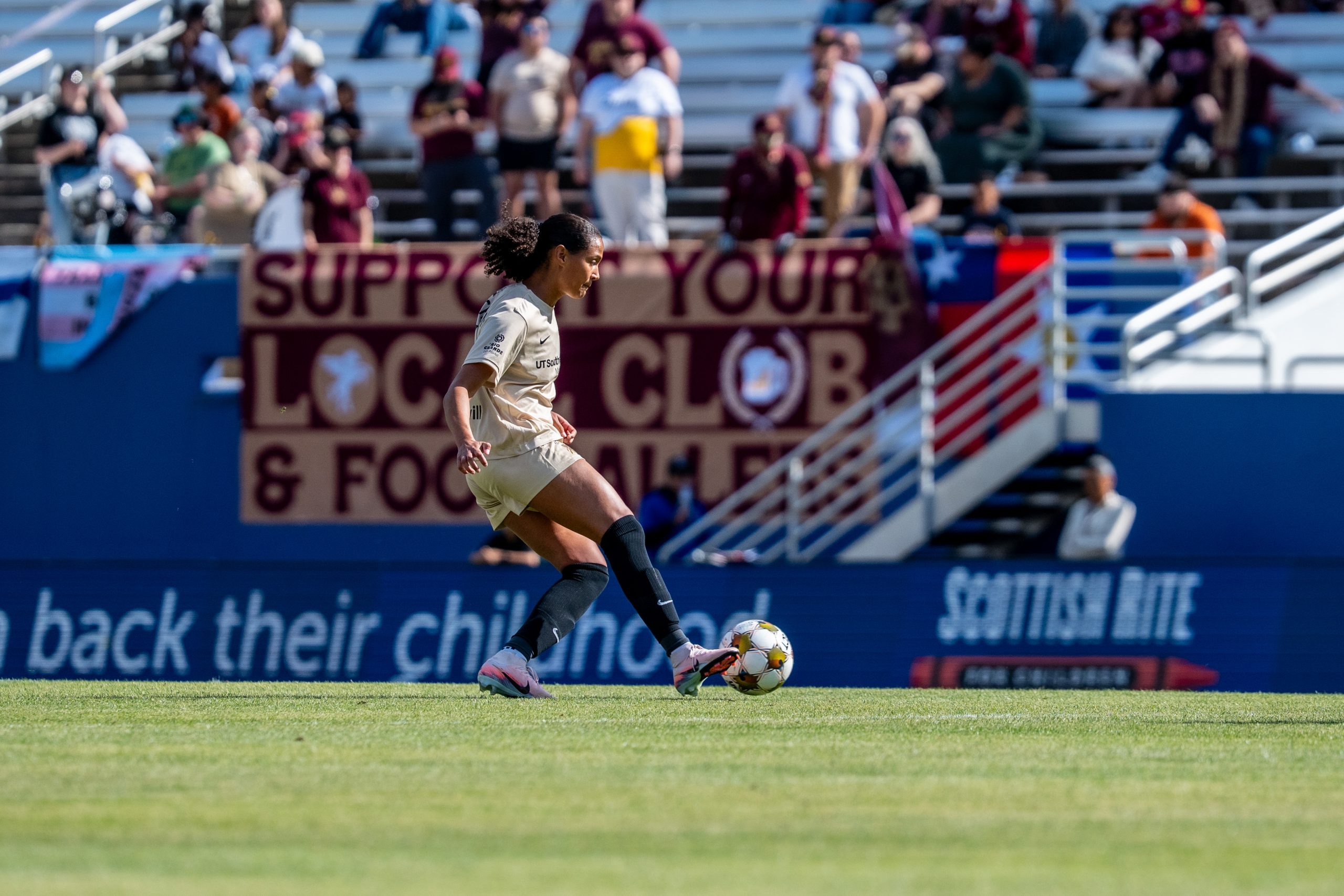
Their message is a hand extended rather than a plan imposed. They say they will back the supporters however they can, with resources, with help recruiting members, with whatever a growing section needs, and they would rather react quickly to what the group asks for than dictate to it.
Valentine, a Chelsea supporter, is firm on one point of philosophy: one supporters’ group per team, behind one goal, undivided. He has watched the alternative fracture atmospheres elsewhere and does not want it here.
What they are chasing is a feeling, the one a first-time visitor gets walking into a European or Latin American ground. The owners talk about wanting the Cotton Bowl to look like a Milan derby, and they know the honest arithmetic behind that wish. It takes 1,000 committed people to build it, and then 2,000. They have 50. Closing that gap is the same problem as closing the attendance gap, only smaller and more human, and the owners seem to understand that solving the second may depend on solving the first.
The Real Start is 2027
For all the ambition, the owners are candid about the near term. The fall is a short season, with a manager who arrives days before players report and a roster he did not assemble. Nobody is promising a trophy, and Nguyen has been granted the grace that timing buys.
The real test comes in 2027, when the Super League shifts to a spring-to-fall calendar and the club fields a squad that is finally the new regime’s own.
Valentine and Morton talked, more than once, about making 20-year decisions and building a 100-year asset. It is the language of people who expect to lose money for a while and have decided that is acceptable.
Whether Dallas rewards that patience is the open question, and the owners know it. They have eight million people, a stadium they can now shape, and a market that has never quite shown up. The bet is that it will.
The reckoning is not this fall. It is the many after.