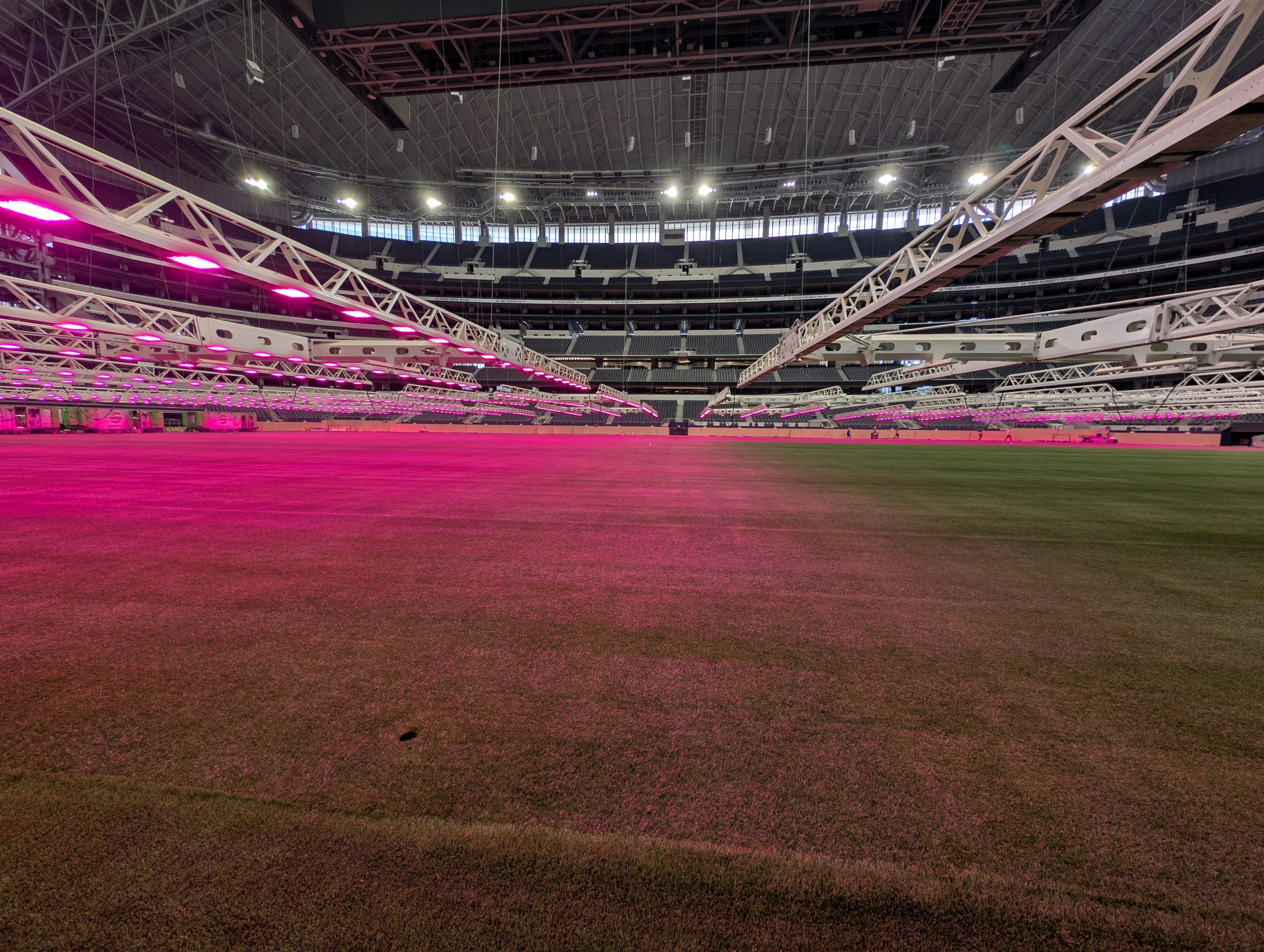
A pink glow welcomed visitors to AT&T Stadium on Thursday as the grass surface that will host nine matches during this summer’s FIFA World Cup was put on show. For the World Cup, due to sponsorships, AT&T Stadium is named Dallas Stadium.
The playing surface at AT&T Stadium has been a recurring source of controversy. From an infamous image of Lionel Messi’s foot slipping under loosely-rooted sod in a 2015 friendly with Mexico, the makeshift fields at AT&T Stadium have been a talking point.
Tim Cahill, Technical Director of the Qatari Football Association, brought up the poor standard of the playing surface at the 2023 Concacaf Gold Cup. CONMEBOL’s Copa America in 2024 began with criticism from Peru after the stadium’s opening game, as captain Luis Advincula exited their group game with Chile, citing Achilles tendon pain.
By the time the USA faced Bolivia two days later, the verdict from USMNT midfielder Weston McKennie was far more positive, labeling the surface “worlds apart of a difference” from their Nations League final just three months prior.
Unlike previous installations of sod laid over sand, the Copa America installation was a month-long process that involved laying ten inches of soil over the concrete floor that the sod could root into.
Crucially, AT&T Stadium also installed a ventilation system that allows for optimal moisture and airflow to encourage growth. The installation for the upcoming World Cup began two months ago, with grass going down at the start of the week, a little less than a month before a ball is kicked in Arlington.
“The team here started putting this in about two months ago,” explained Ewen Hodge, FIFA Head of Pitch Infrastructure. “It starts from the ground up, the existing cement layer that’s here. They’ve been filled up with a Permavoid layer, where we run the vacuum ventilation system through that system that feeds up into the sand root zone, where the irrigation system sits as well. That’s about 10 inches of sand, and then, obviously, the sod layer.”

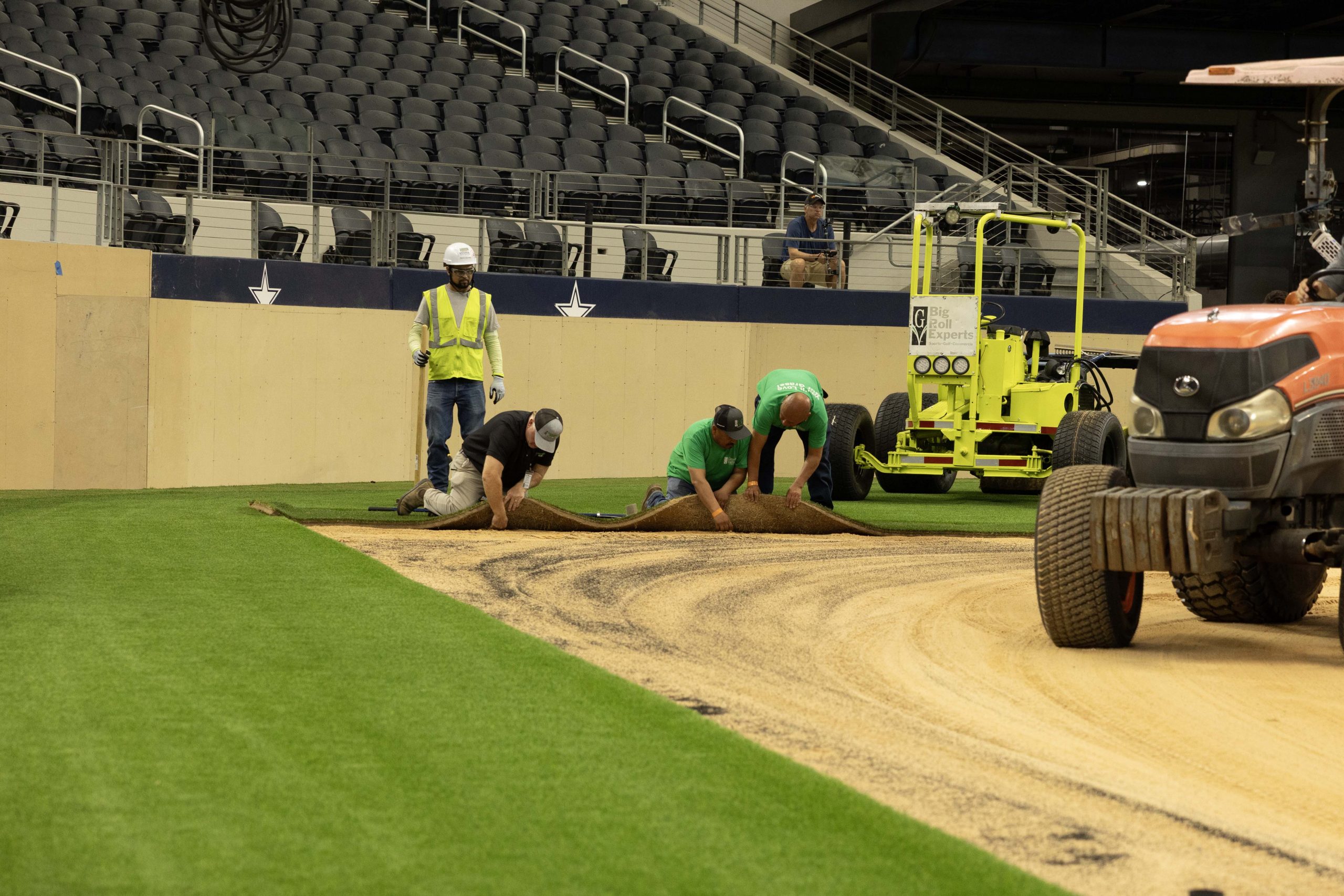
The World Cup presented an additional challenge as the NFL field size doesn’t meet the pitch perimeter requirements for the World Cup. To solve this, AT&T Stadium eliminated the field-level suites and raised the surface by around three feet to pitch-level. All 16 venues will maintain the standard 105m x 68m (115yd x 75yd) pitch size.
Considered a cold-weather venue due to the indoor climate control, Dallas Stadium has been equipped with a Kentucky bluegrass and ryegrass blend, similar to FC Dallas’ winter overseeding, as former FC Dallas Director of Stadium Grounds and current Dallas Cowboys Field Operations Manager, Allen Reed, detailed in 2022. The sod was harvested in Colorado and transported to Arlington.
The next step is a synthetic fiber stitching to help anchor the sod and reinforce the seams between rolls. Three GrassMax machines were set ready to inject over 18,000,000 fibers into the ground over the coming days.

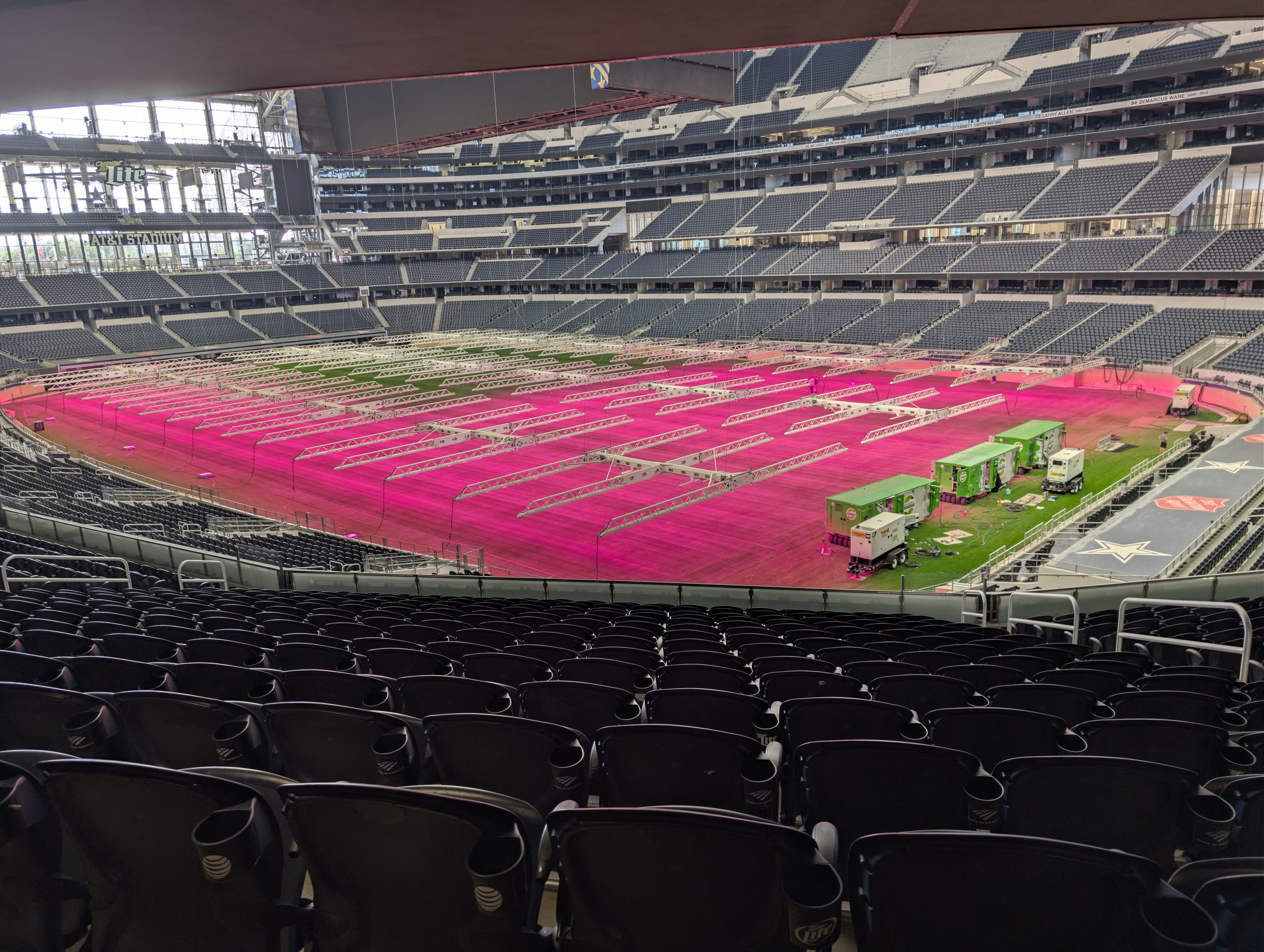
The dominating feature is the full-field grow lights that cast their warm pink glow across Jerryworld for twelve hours each day. Typically wheeled onto the field in zones, the lights at AT&T Stadium are suspended from the roof structure — what Hodge believes is a world first. “They’re all LED grow lights,” he said, “providing basically the heartbeat to the pitch.” On match days, the lights will remain in the rafters, raised clear of play throughout the tournament.
With 44 test events, including Copa America, in the books, FIFA, AT&T Stadium, and the local organizing committee anticipate a consistent world-class playing surface that puts player welfare and the effect on the ball on an even keel with any naturally grown permanent surface.